
The Invisible Handshake
The role of trust in construction's Digital Transformation


It feels like BIM, digital, and information management in construction have reached a stalling point.
For more than twenty years we’ve picked off the low-hanging fruit. Models and coordination, setting up EDMS and calling them CDEs, introducing naming conventions, and a few handy visualisations. All useful - yes - but mostly bolt-ons. None of it demanded much genuine change from our colleagues in project roles.
We should give ourselves credit for the work to date. We’ve delivered value and built credibility. But now we’re at an inflection point. The remaining value in digital isn’t locked in tools, it’s locked in how projects are delivered.
The truth is technical skill and competence are no longer enough.
Why Skills Alone Won’t Get Us Further
In the past, it was enough to win over a project manager, secure a little budget, and run a digital initiative on the side. But the next leap requires something bigger - influencing colleagues, teams, and businesses to change the way they actually work.
That kind of change isn’t unlocked by technical brilliance alone. It’s unlocked through softer skills - stakeholder engagement, relationship-building, and above all, trust.
Without a mandate or a chain of command, digital professionals live or die on their ability to influence. And influence is built on trust.
What Trust Really Means
Wikipedia defines trust as “the belief that another person will do what is expected. It brings with it a willingness for one party (the trustor) to become vulnerable to another party (the trustee), on the presumption that the trustee will act in ways that benefit the trustor.”
The key words here are belief, vulnerable, benefit. These are not technical terms. They’re emotional.
Mayer and Schoorman’s Integrative Model of Organizational Trust boils trust down to three contributors:
Ability (Competence): Do others believe in your skills, knowledge, and experience? Do you consistently deliver accurate information and effective solutions?
Benevolence: Do people believe you genuinely care about their outcomes? Are your actions in the project’s best interest, or do they look self-serving?
Integrity: Do you operate with honesty and transparency? Do you do what you say you’ll do?
Without a mandate, these aren’t just nice-to-haves. They are the currency of influence.
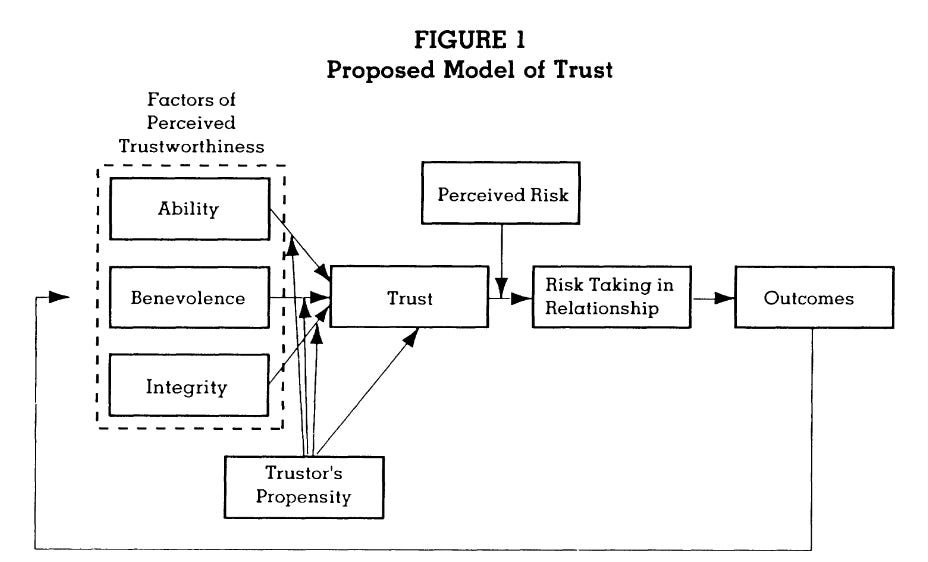
(figure from An Integrative Model of Organizational Trust on JSTOR)
Skin in the Game
Here’s a major challenge in transformation - digital experts rarely carry the same risk exposure as the project teams they’re advising. If a programme slips or costs escalate, the project shoulders the pain. Digital interventions can sometimes look costless to us but risky to others.
This imbalance makes it harder to influence. To overcome it, there needs to be shared risk where possible. That might mean linking digital initiatives directly to project KPIs, tying interventions to outcomes, or committing to measurable impact. Without some degree of “skin in the game,” trust is difficult to build.
First, Do No Harm
Another lesson comes from medicine. Iatrogenics - is a term for harm caused by intervention. Sometimes, despite good intentions, doctors make patients worse.
Digital interventions carry the same risk. Overcomplicating standards, enforcing processes that add admin without benefit, or implementing “solutions looking for problems” can all erode trust.
As Nassim Taleb writes in Antifragile - we should only intervene when the chance of benefit outweighs the risk of harm. Digital for its own sake is vanity. Digital that reduces risk, effort, or cost is value.
Building Trust: Tools for Influence
Trust doesn’t appear overnight. It’s earned through repeated behaviours. Here are practical ways digital professionals can build it:
1. Be a consistently reliable expert
Deliver on commitments: Fulfil promises, meet deadlines, and manage expectations realistically. Never overcommit and underdeliver.
Showcase expertise: Demonstrate your knowledge in ways that matter to stakeholders, and keep learning.
Proactively problem-solve: Anticipate challenges and propose proportionate solutions - always weighing benefit vs. harm.
2. Cultivate genuine relationships
Listen actively: Understand what keeps stakeholders awake at night, and what gets them out of bed in the morning. Speak their language, not BIMinese
Be supportive: Offer guidance without expecting immediate return. Celebrate their wins.
Communicate openly: Be transparent about process, cost, and limitations. Admit when you don’t know.

3. Champion shared values
Align with project goals: Frame digital in terms of safety, cost, programme, or client outcomes — not “shiny tools.”
Promote collaboration: Create environments where knowledge is shared and collective problem-solving thrives.
Losing Trust: Faster Than You Think
Trust is slow to build but quick to lose. It erodes through:
Missed deadlines and broken promises.
Dishonesty or lack of transparency.
Self-serving behaviour.
Repeated errors or visible incompetence.
Harmful interventions (iatrogenics) which add work or cost without value.
Lose trust, and influence disappears.
Repairing Trust: Recognise, Respond, Rebuild
Mistakes happen. What matters is how you handle them.
Recognise: Acknowledge the harm directly and quickly. Own it.
Respond: Provide context without excuses. Show insight into what went wrong.
Rebuild: Commit to a corrective plan and follow through consistently. Each small delivery is a step back toward credibility.
Trust won’t be repaired with a single apology. It’s rebuilt brick by brick through patience and consistency.
Wrapping Up
Digital transformation across construction has reached the end of the bolt-on era. The next wave of value is locked behind behaviour change. And behaviour change requires influence through trusted relationships.
For digital professionals, trust is not soft or optional. It’s leverage. It’s the invisible handshake that helps us influence, guide, and enable teams to unlock value that technical skills can't reach alone.
So ask yourself - are you investing in your relationships as well as your technical capability? Because without both, you’ll only ever get halfway to transformation.